

Why Partnership and Engagement Matter to the Public Service
ETHOS Issue 28, Apr 2025

In recent years, the Public Service has placed ever greater emphasis on partnering and engaging the public. Over the years, we have progressed from simply communicating policy decisions to consulting the public more purposefully to build consensus for issues of public concern. We have also begun to develop ways to co-create and co-deliver solutions with the public.
Recent initiatives, including the Forward SG exercise, Alliances for Action (AfA), and the establishment of the Singapore Government Partnerships Office (SGPO), are examples of how partnership and engagement with citizens have become more important to the way we fulfil our mission as a Public Service. Indeed, we now consider working effectively with citizens and stakeholders a core competency for public officers, further anchoring our commitment to partnerships and engagement in our work.
Our Context is Shifting
The 2024 Edelman Trust Barometer indicates that Singaporean residents have a high level of trust in the Government.1 This stands in contrast to many other countries—among the 28 countries surveyed by Edelman, government was distrusted in 17 of them.
Trust in government is critical. It is a barometer of how confident people are in their government to do what is fair, right and in their best interests. With trust, we have the support of the public for what we do. Without trust, our actions and decisions can be viewed with scepticism and even disdain, as some other societies are experiencing. The Government, conversely, may have less policy space to do the things it believes is right and good for the country.
However, trust levels are not static. Around the world, societal polarisation, big power contestation, climate change, demographic transitions, and even the advent of artificial intelligence, are threatening to significantly disrupt societies. Such trends have generated anxiety and uncertainty about the future and can weaken a people's trust in their government.
Our Public is Changing
Singapore is not immune to these developments. Domestically, we are witnessing changes that can divide our society. Social media has amplified the flow of information, leading to a wider and more divergent range of views among our people on many issues. Cultural and political influences, even from halfway across the globe, can now pull us in different directions.
In recent years, we have also seen a shift in expectations among Singaporeans on how they want to be governed. While the Government remains responsible for deciding how best to serve and build Singapore's future, it cannot claim to have a monopoly of ideas. Singaporeans today are more affluent, better educated, and well-travelled; they have also become more diverse in profile, needs, and aspirations. Many have ideas and a desire to take action on issues that they care about. Empowering and working together with more Singaporeans to address issues of shared concern can help strengthen their continued trust in Government, and bolster their sense of having a stake in this country.
In the next bound of nation-building, greater attention must be given to the "heart" skills of engaging, listening, empathising and partnering, in order to maintain and build trust with Singaporeans.
To do this, the Singapore Public Service must continually reinvent our thinking and the way we engage our citizens. It will no longer be sufficient to focus only on achieving technical excellence, or the "hard" skills. In the next bound of nation-building, greater attention must be given to the "heart" skills of engaging, listening, empathising and partnering, in order to maintain and build trust with Singaporeans.
The Three Ts in Partnership and Engagement
The focus of public engagement in the Public Service can be expressed as the three Ts:
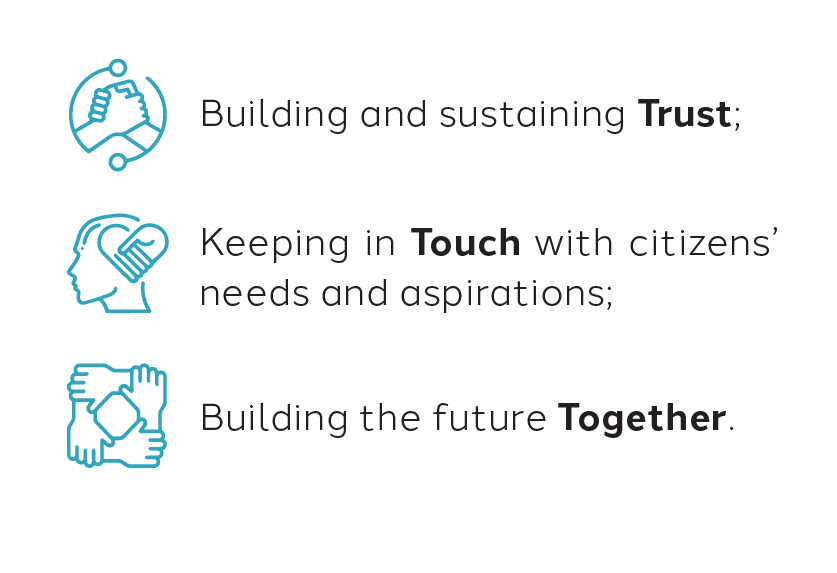
Building and Sustaining Trust
We must never take the high level of trust in our Government for granted, because building and preserving trust is an ongoing endeavour. Trust is built painstakingly through the daily efforts of our public officers to serve the public diligently. But it can be broken by one act or incident that shatters the public's confidence in us.
To build and sustain trust, we must first and foremost be effective in how we serve the public. Beyond that, we must also double down on our efforts to better engage the public. The Government has made a stronger push to engage more widely and deeply of. In 2022, the Government mounted the Forward SG Exercise2 to engage Singaporeans on how to refresh our social compact. This was a massive effort—our officers engaged more than 200,000 Singaporeans over the 16-month exercise.
It was an important effort that gave Singaporeans the opportunity to share their diverse views, develop a better appreciation of the trade-offs involved in different policy priorities, and generate good conversations about areas that the Government and people should focus on. In partnership with Singaporeans, we were able to generate a collective sense of the key areas to work on, to build a stronger society.
Besides such nationwide exercises, we have also stepped up the tempo of thematic engagements and expanded the range of modalities of engaging the public. Last year, the Ministry of National Development ran a series of conversations to engage Singaporeans on their housing aspirations, and invited participants to role-play the Housing and Development Board (HDB) in deciding how to allocate HDB flats to different archetypes of Singaporeans. Through these sessions, the public learnt to better appreciate the trade-offs that the Government has to grapple with, while public officers were able to identify new areas of concern.
REACH (reaching everyone for active citizenry @ home) is another good example of how we are constantly improving the way we engage the public. In addition to organising in-person and virtual dialogues and Listening Points, REACH has expanded its public presence through WhatsApp, Telegram, and a range of social media platforms. In March this year, REACH partnered Allegra Productions to engage young adults through Interactive Theatre, where performers acted out scenes based on topics such as housing, parenthood and the 'Singaporean Dream'. By catering to changing societal profiles and interests in creative ways, REACH has been able to better connect with diverse groups of Singaporeans on important issues.
Demonstrating that we care about the needs and concerns of the public as we serve and engage them, is also important for building trust. I recently received an email from a member of the public who took issue with the decision of an agency pertaining to his case. He asserted that "civil servants have a responsibility to be engaging and cannot behave in (an) uncaring and negligent manner". Even though I did not agree with his position on the case, his feedback was insightful in highlighting an expectation—that civil servants ought to have been more caring in the way we engaged him, rather than simply closing his case with an officious and curt email. His view is likely shared by an increasing number of Singaporeans.
Engaging with care and empathy builds trust.
Care comes from our empathy for the people we serve. When the public gives feedback, do we respond earnestly or sluggishly? Do we try hard to understand viewpoints from the public, even those that challenge our own perspectives? Do we actively seek to improve our policies and processes, and harness new tools and technology in order to serve the public better? Every touchpoint and every interaction with the public is an opportunity for us to win and build trust. To do this continually, we must maintain a strong sense of service and empathy for the public that we exist to serve. Engaging with care and empathy builds trust.
Keeping in Touch with Citizens' Needs and Aspirations
As a Public Service, it is essential that we keep in close touch with the public that we serve. This means understanding citizens' changing needs and aspirations, as well as their daily, lived experiences. It is not enough to just look at quantitative data on whether lives of our citizens are improving; we must augment this understanding with a qualitative appreciation, which is possible only through deliberate efforts to interact with our citizens.
To this end, we have stepped up efforts to empower public officers to engage citizens more and stay close to the ground. The Ministry of Culture, Community and Youth has developed hands-on and interactive resources like the Partnership and Engagement Playbook, which provides step-by-step guidance to officers on how to design and implement engagements.
Last year, we also launched the Public Service for Good (PSFG) movement to encourage public officers to volunteer and do good for fellow Singaporeans. Under the PSFG, more than 1,000 public officers have stepped up to contribute in various ways, such as mentoring youths and befriending seniors. In early 2024, the Public Service Division partnered Montfort Care and the Government Technology Agency to pilot the Government Assisted Living Ecosystem (GALE), allowing our public service befrienders to engage vulnerable seniors online, in real-time.
We have also redesigned the Engagement Immersion for Leaders (EIL) programme to give Middle Managers and Directors more opportunities to develop ground engagement capabilities and experience, understand how policies affect citizens' lived experiences, and develop greater empathy and stronger instincts to think and act in a citizen-centric manner.
Building the Future Together
A strength of our Government over the years has been achieving the duality of dealing effectively with today's issues and problems, while working on and building the future for Singapore. We must develop better ways to plan and build the future together with Singaporeans, and tap on their evolving ideas, hopes and aspirations. Co-creating the future more closely with Singaporeans is one way of strengthening collaborative governance. It avails to us a greater diversity of views and richer ideas that can strengthen policymaking and better prepare us to seize new opportunities. Such an approach also deepens ownership on the part of Singaporeans for the future we seek to build together.
The work of the Kampong Gelam Alliance (KGA) is an example of how diverse views can be harnessed to shape the future of a precinct and community. The KGA, comprising residents, cultural institutions, property owners and businesses in Kampong Gelam, had worked with the Urban Redevelopment Authority (URA) to develop a set of plans for enhancing the heritage and vibrancy of the Kampong Gelam Historic Area. From August 2022 to July 2023, the KGA invited over 1,600 members of the public to provide feedback and share their aspirations on the future of the precinct. The KGA's efforts culminated in a roadmap—the Kampong Gelam Historic Area Place Plan—that set out the community's shared values and vision for the Kampong Gelam area over the next five years.3
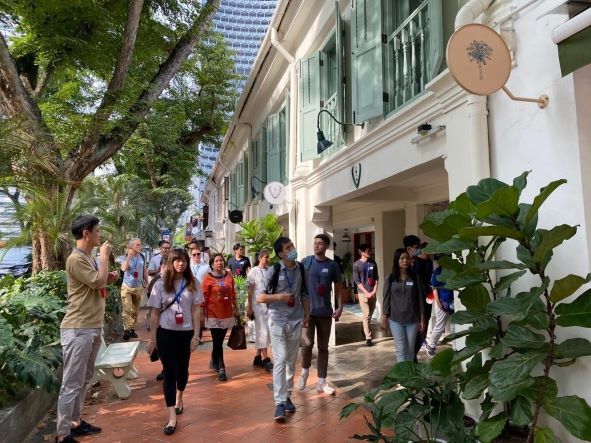
We must develop better ways to plan and build the future together with Singaporeans, and tap on their evolving ideas, hopes and aspirations.
The Government has mounted similar efforts to partner Singaporeans in shaping the future of public housing, a topic close to the hearts of many. As part of the Remaking Our Heartland (ROH) programme, HDB has engaged residents and various community stakeholders on their aspirations for their town and neighbourhood, and co-creating the ROH proposals with them. Engaging with persons living with dementia and their caregivers on their lived experiences and challenges has informed HDB's approaches to improve and better prepare for a more aged society in the future.
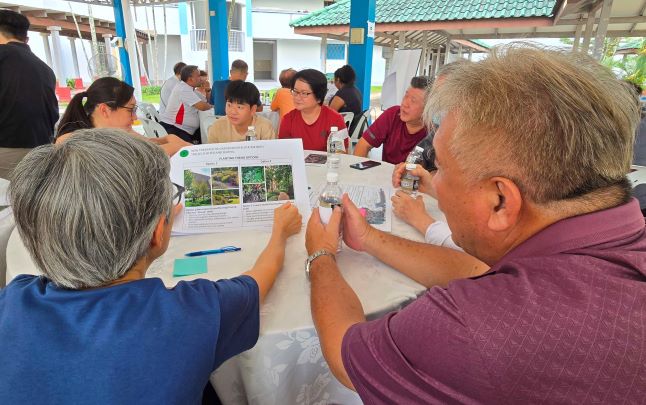
We have also been more purposeful in providing youths a platform to co-create policies with the Government, and build the future society that they want to see. Last year, the National Youth Council (NYC) introduced Youth Panels to institutionalise youths' involvement in the policymaking process. Public agencies use these platforms to share their policy contexts and considerations and invite youths to propose policy recommendations. These approaches enable us to engage youth more deeply on a broad range of issues, including financial security, careers and lifelong learning, digital well-being and sustainability.
Such initiatives are examples of what will be a new norm for the Government. In January 2024, we launched the SGPO as a first stop for citizens and interest groups who are keen on partnering the Government to address cross-cutting and complex issues. The SGPO website includes a Partners Portal that offers partnership resources to empower citizens to turn ideas into action. As public officers, let us make full use of these resources and opportunities, to partner and engage the public to build the future together with us.
Partnering Citizens to Build a Better Singapore
The Singapore Government Partnerships Office (SGPO) was officially launched by then Deputy Prime Minister and Minister for Finance Lawrence Wong on 19 January 2024, with the mission to strengthen the government's partnerships and engagements with citizens. It addresses a key theme emerging from the 16-month Forward Singapore exercise—that Singaporeans aspire to play a more active role in shaping their communities, and co-creating policies, public spaces and services.
The SGPO has three functions:
- It acts as a first-stop for citizens and interest groups keen on partnering the government, by identifying opportunities for collaboration and linking interested citizens with the relevant agencies. Its website includes a Partners Portal that offers a range of partnership resources, and enables citizens to share their proposals.
- SGPO brings people together to share knowledge, expertise and best practices on effective partnerships.
- SGPO amplifies stories on inspiring changemakers, to encourage more to step forward and contribute.
Find out more at www.sgpo.gov.sg
Our Ethos for the Next Bound
Today, the Singapore Public Service is well regarded by other public services around the world, and more importantly, by the public that we serve. We must leverage this position of trust to strengthen how we serve and partner with Singaporeans.
Growing our competencies to partner and engage with Singaporeans will become more critical. We will have to persevere in our efforts to better understand Singaporeans' needs, hopes and aspirations. We must develop new and better ways to partner with Singaporeans to formulate and implement new solutions and initiatives, in order to seize opportunities and address challenges. We also need to better listen and empathise, and strengthen our agility to improve processes and programmes to be more citizen-centric.
Collectively, these shifts will help us build and sustain trust, keep in closer touch with the views and needs of the public that we serve, and partner and engage them to build a brighter future together, for Singapore and Singaporeans.
NOTES
- The Edelman Trust Barometer is an annual survey conducted by Edelman (a global communications firm) on demographically representative samples in countries around the world, surveying individuals on their level of trust towards different institutions in society, including government, media, businesses and non-governmental organisations (NGOs). The 2024 survey was conducted in 28 countries and involved around 32,000 respondents.
- For more information, visit https://www.forwardsingapore.gov.sg/.
- For more information, visit https://www.listeningtokg.org/.