

The SG100 Futures Lab: A Prototype for Seeding Trisector Collaboration
ETHOS Issue 28, Apr 2025

Tri-Sector Collaboration is Needed to Tackle Today's Complexities
Today's complex global challenges—be it climate change, public health crises or economic inequality—are too large for any single entity or sector to solve on its own. Governments, businesses, and non-governmental organisations or civil society (also termed the Public, Private and People or 3P sectors) each play critical roles in addressing these issues, but it is through collaborative efforts that their impact can be magnified. Tri-sector collaboration—the strategic partnership between these sectors—is essential to creating innovative solutions that can be implemented effectively, with the necessary support to be sustainable for the long term.
Singapore has on record numerous compelling examples—from Smart Nation to SkillsFuture and the Sustainable Singapore Movement—of how tri-sector collaboration can create significant positive outcomes. The public sector in Singapore has many contributing strengths, such as a strong regulatory environment and effective policy frameworks. However, significant gaps remain, particularly in engaging civil society and fostering ecosystem level collaboration beyond business-government alliances. In this light, the establishment of the Singapore Government Partnerships Office (SGPO)1 is a welcome step forward. Nevertheless, more can still be done to bring leaders across the three sectors together in equal measure for dialogue in a consistent manner.
Co-creating the World We Want to Live In
Facilitated jointly by the creator of Theory-U, Otto Scharmer2 and the then Dean of the Centre for Systems Leadership and Managing Director of Sequoia Group, Jacqueline Wong, the SG100 Futures Lab3 was born of an initiative by a nucleus group of senior leaders from across Singapore's 3P sectors coming together,4 on their own accord, out of a concern for the shortage of platforms for convening systems leadership dialogues. The idea was to create a space for envisioning the desired future we want to create for Singapore for SG100.
The Lab and Process
The initiative was intentionally named a Lab to signal it as a deliberative space for reflective dialogue and sensing the future—rather than a task force, project team or action-bound steering committee. The Lab was meant to be a parallel space, in which participants could step out of their individual organisational and sectoral perspectives and come together for meaningful dialogues about what they collectively care most about creating for a future Singapore.
Participants were brought through a guided "U-process":5 this first required a suspension of answers and know-hows, then a disciplined co-observing, co-sensing and contemplation (also known as "presencing"). Participants then articulated and crystalised for themselves what actions would be of most significant impact from the perspective of a future generation and the whole ecosystem.
The Call to Participate
The nucleus group personally reached out to their contacts in the three sectors to explain, enrol and engage people they know who might be keen to embark on this learning journey together. Participant had to commit to the three-day SG100 Futures Lab, which was by invitation only. A total of 24 leaders from SMEs, MNCs, social service agencies, government and civil society responded to the call. The Lab was held on 7 to 9 November 2022.
The Lab then culminated in a larger Centre for Systems Leadership Conference, centred on the same theme of SG100, involving a larger community of over 150 leaders. This was held on 10 November 2022.
Objectives
The Lab aimed to uncover the deeper reasons why existing systems and structures often led to fragmented outcomes that 'nobody wanted' and to help leaders recognise personal leadership blind spots that hindered collaboration across boundaries. Shifting the collective focus towards a future they truly cared about, the Lab sought to prototype ideas for realising this vision, while building a community of leaders passionate about driving systemic transformation for themselves and others.
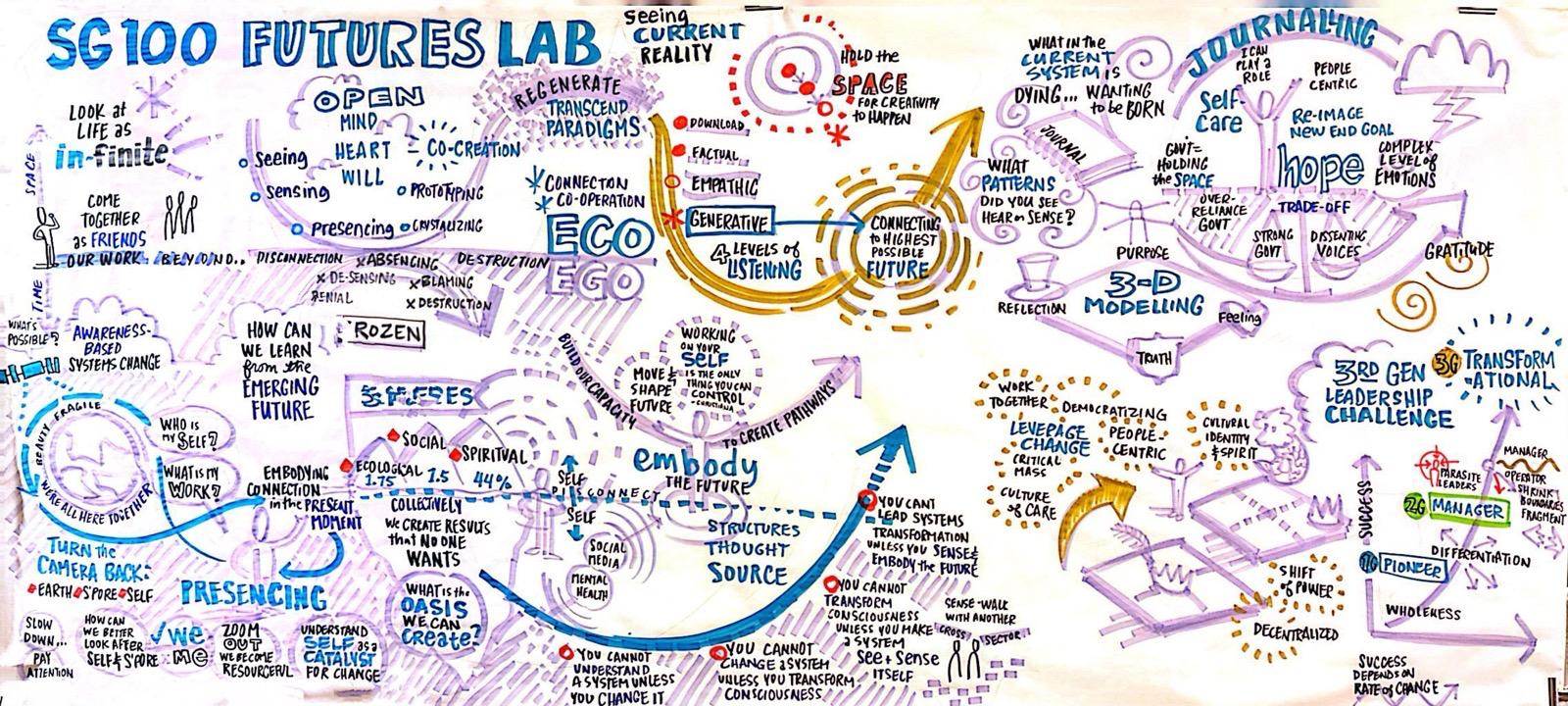
The Experience
Over three days, participants engaged in practices of deep listening, generative inquiry, deliberate stillness and embodied movement to make visible "the emerging future."
Turning Inward for Insight
The Overview Effect6 is a profound cognitive shift experienced by astronauts when viewing Earth from space for the first time. They often report intense emotions and a sense of unity with humanity and the planet, leading to a new level of environmental awareness and care for the planet amongst astronauts.
During the Lab, participants engaged in a reflective process that mirrored the Overview Effect, focusing on their own experiences and insights about Singapore and its challenges. Recognising the fragility of their environment and the interconnectedness of societal issues, they reflected on what it means to be Singaporean and their roles in shaping the home they care about. Their cognitive shift was recognising that effective leadership is not just about What we do or How we do it, but is dependent on the inner place and intrinsic motivations from which we operate.
Sensing and Presencing: Embodiment
To further experience this cognitive shift, the group created a 3D sculpture representing how we as a system today collaborate on addressing complex challenges our nation faces. After building the model, they reshaped and iterated it to reflect the system they aspired to build. This creative expression let participating leaders visualise systemic barriers, hard truths and potential pathways for transformation.
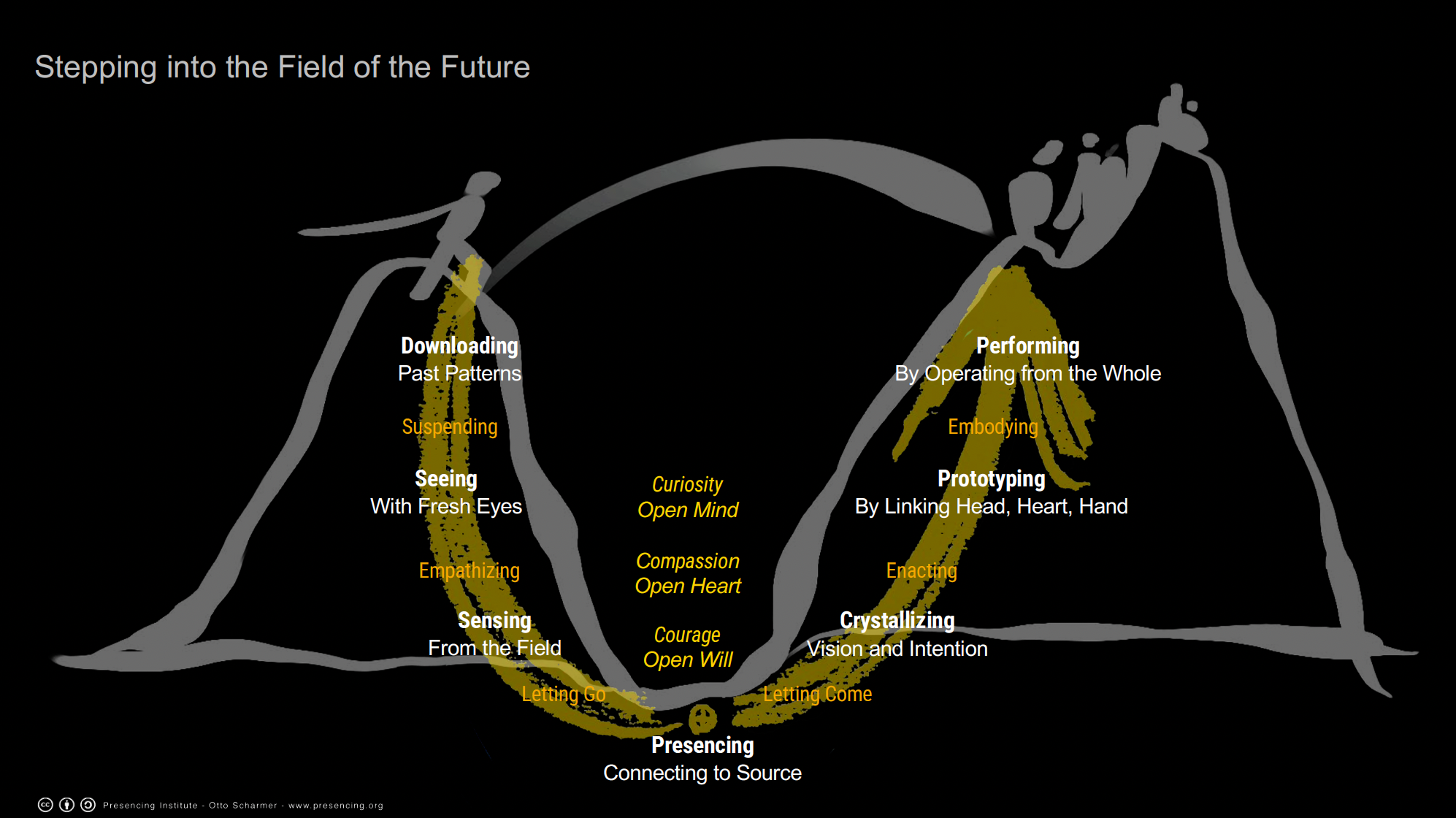
This method of making collective thinking visible opened up space for collaborative building and looking at the whole ecosystem. It shifted the group from saying what people want to hear and speaking as individuals representing their vested interests to speaking from seeing themselves from the whole.
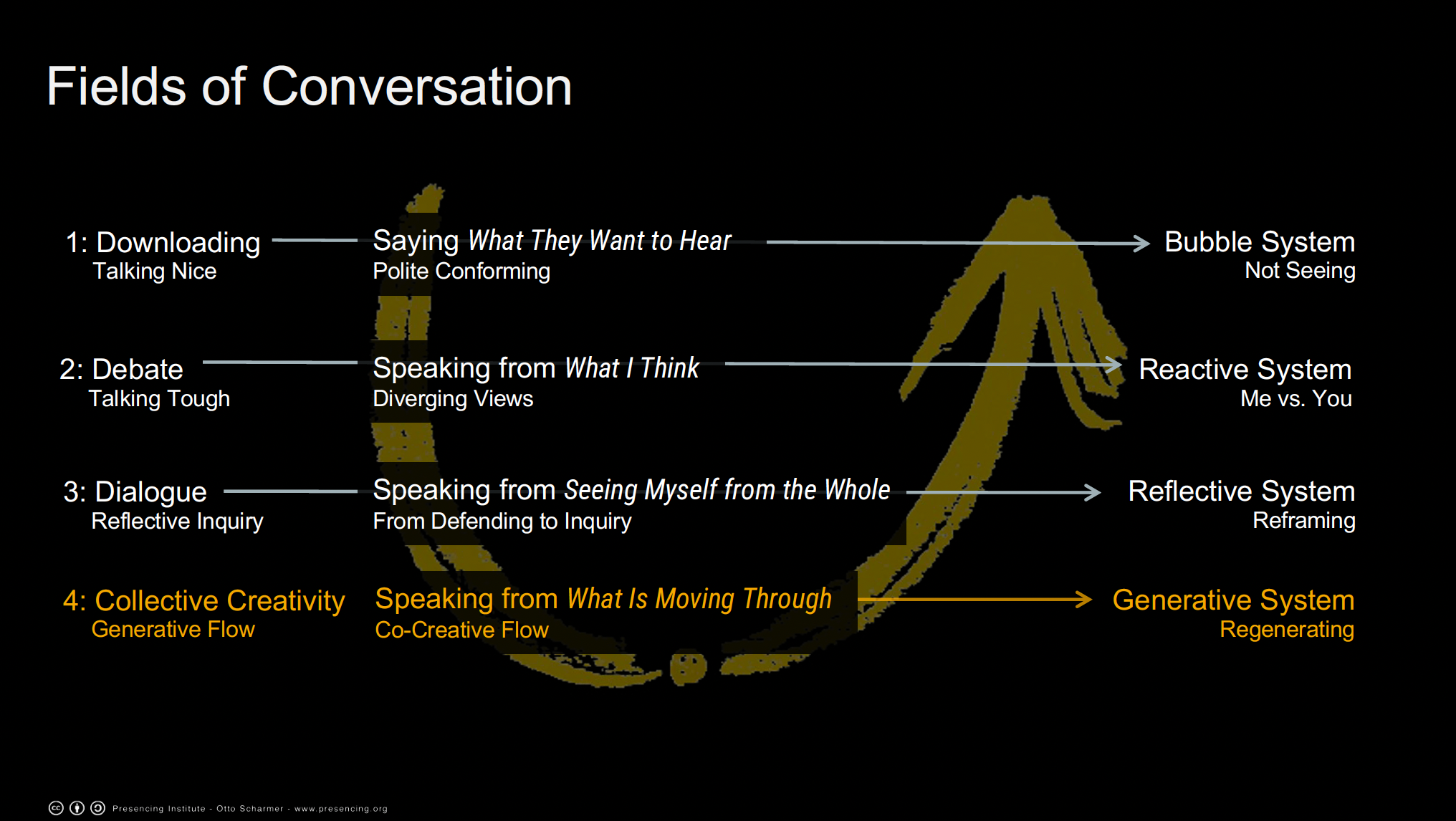
To deepen the practice of speaking and seeing themselves from the whole, the participants also experimented with 4D Systems Mapping. Using an embodiment method from Social Presencing Theatre (SPT),8 group members physically embodied roles within a system and—through relational positioning, movement and spoken expression with these roles—made visible the system's current reality and emergent potential.
You cannot understand a system unless you change it
You cannot change a system unless you transform consciousness
You can't transform consciousness unless you make a system see and sense itself
You can't lead system transformation unless you sense and embody the future as it emerges
A total of 13 roles were defined for this 4D mapping: Mother Earth, ASEAN, China, US, Singapore Government, Big Businesses, SMEs, Social Sector, Arts and Culture, Children and Youth, Marginalised People, and Retirees. The task was to embody the Vision of Singapore, SG100.
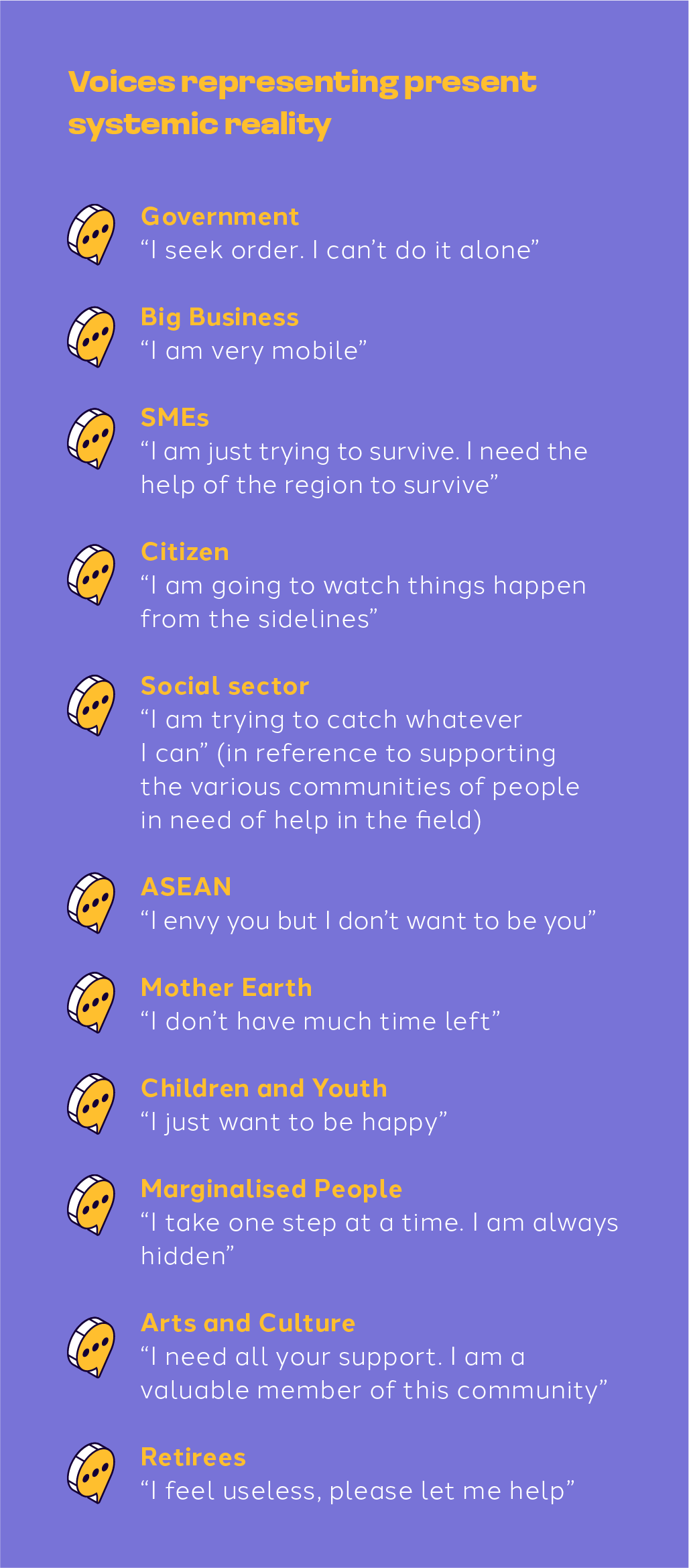
The roles were intentionally selected to represent the voice of the system as much as possible in this gathering and to mirror the three divides (earth/environment, marginalised groups or individuals who are usually not the decision-makers, and the voice of the future). Thirteen members stepped forward to take on these roles while the rest observed. The only guideline given was to not choose a role they actually play in daily life. For example, we had a government representative choose the role of the citizen, a soon-to-be retiree choose the role of a child, a young working adult choose the role of a retiree, and so on.
By deliberately stepping into new roles, leaders gained insights into alternate realities, and a deeper appreciation of systemic dynamics and interconnectedness.
Participants each formed a shape in the shared space to represent their role in the system. Each member found their space in relation to the centre, the edge and others. They asked themselves, "Am I bigger, smaller, in the centre, to the side; do I feel powerful, weak and vulnerable?" They were reminded not to act, but to empathise, identify with the role and embody it. Once they found their shape and space, they offered one sentence from the experience of the shape in the first person 'I' voice. The process was repeated until everyone's voice was heard.
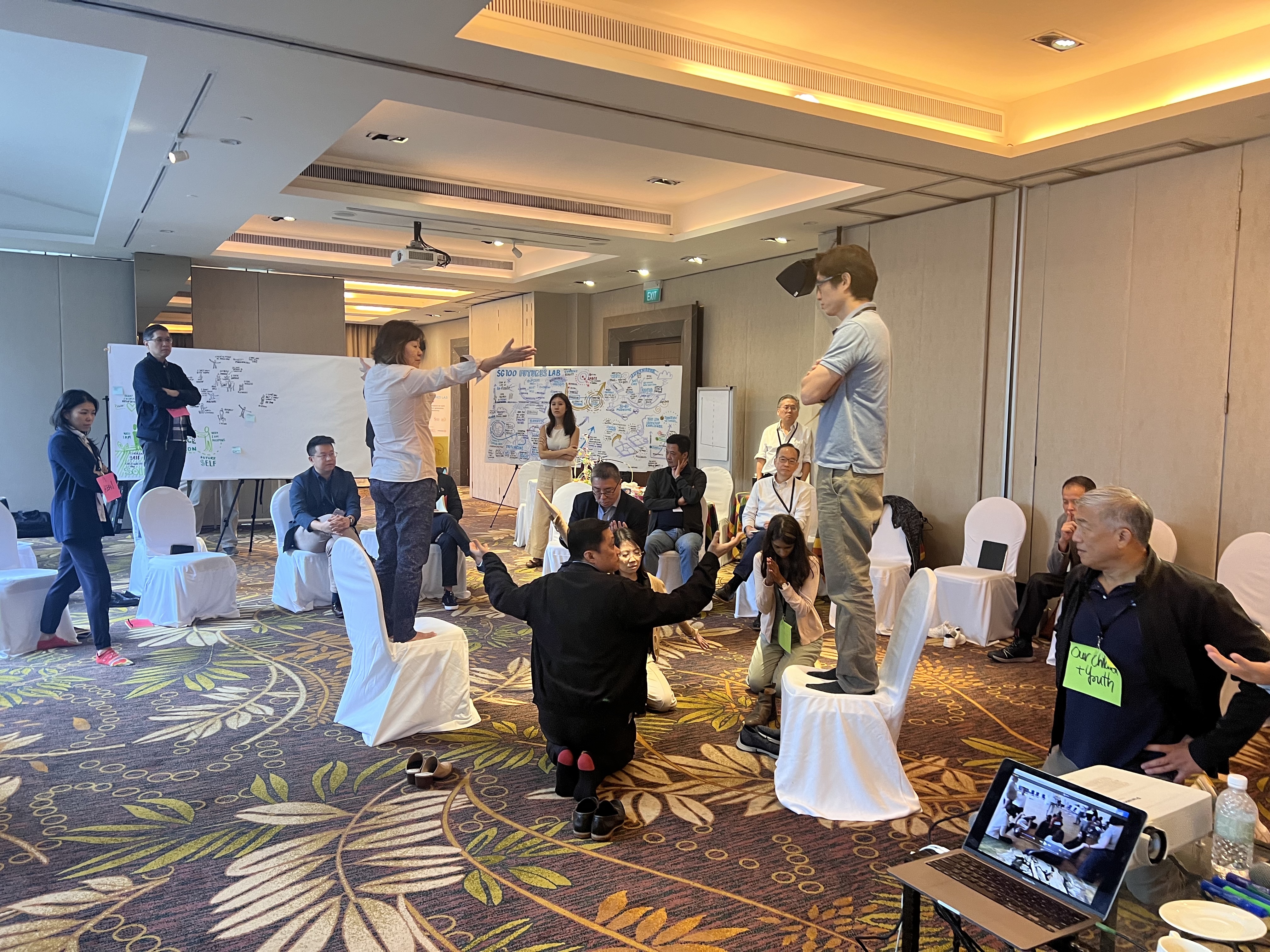
The group was then prompted to take up new positions and form different shapes, based on a mindful awareness of their own bodies relative to the surrounding space and each other—rather than acting out preconceived ideas or concepts. This led the group to shift organically from their positions in Sculpture 1 (current) to Sculpture 2 (future), revealing potential new and different relations between each role relative to each other and to the whole. Notably, the sculpture evolved from government being in the centre to the government operating from the periphery, enabling citizens and stakeholders to play a bigger role.
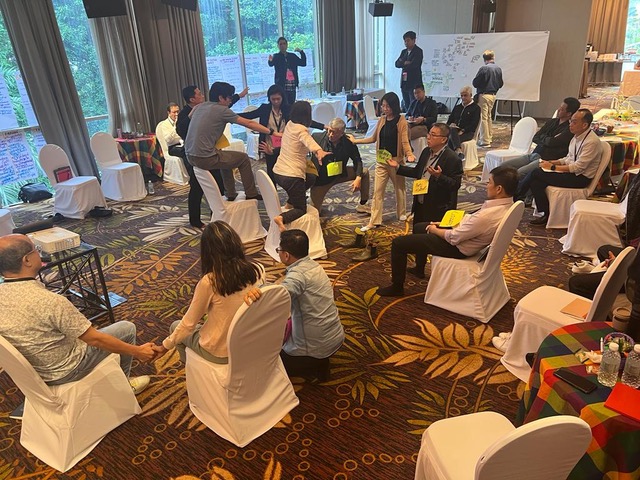
Participants were asked to reflect on what they noticed, saw or did leading to the formation of the new, future-oriented sculpture. Their reflections highlighted the importance of addressing gaps and overlaps in our systems, particularly for those who are hidden or marginalised. There were some who challenged us to consider whether people feel a true sense of belonging to a whole, and whether our society fosters unity. Others reiterated the need to unlearn traditional approaches and embrace new ways of thinking. Instead of seeking solutions from centralised authority, the group offered suggestions to look to the margins and the edges where change often originates.
Co-creating the Emerging Future
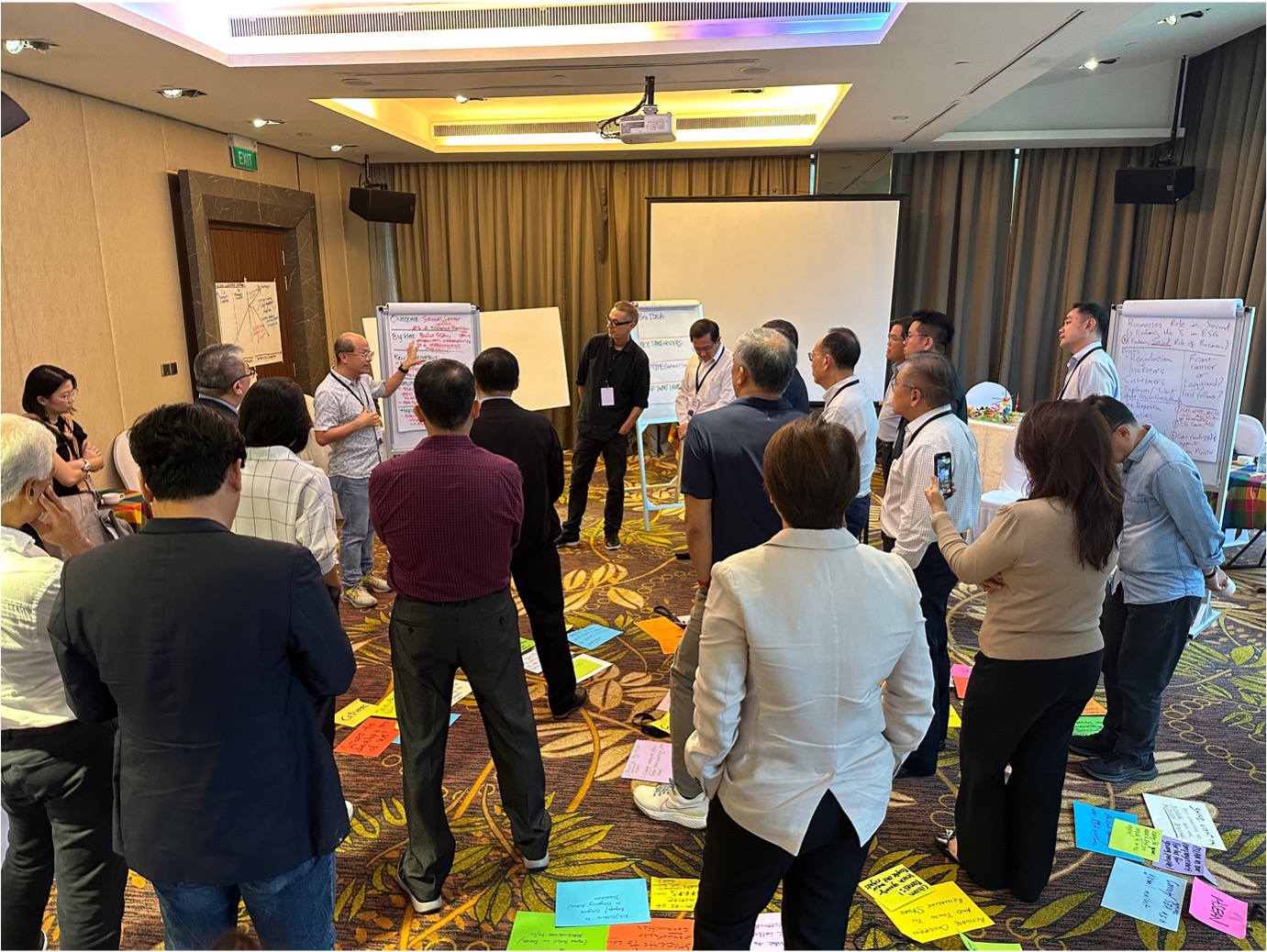
The group then articulated what they saw as the leverage points to realise the envisioned future embodied in Sculpture 2. Their ideas centred on reclaiming our relationship with self and with others, as well as with the environment we inhabit. These included:
- Establishing an Arts & Nature Lab: To empower artists to engage citizens in reconnecting with nature, fostering environmental awareness and community involvement.
- Creating a Living Lab for Active Citizenry in Schools: To educate children and youth about their rights and encourage them to envision the Singapore they wish to create, promoting civic engagement and social responsibility.
- Promoting Purpose-Driven Businesses: Enhancing the role of the "S" in ESG (Environmental, Social, Governance) criteria, encouraging businesses to adopt socially responsible practices that contribute positively to society.
- Leveraging Retiree Expertise: Using the skills and knowledge of retirees to augment manpower in social sector service delivery, thereby enhancing community support systems.
- Fostering a Culture of Giving and Nurturing the Heartware of Singapore: Encouraging a culture of giving by all was identified as a way to strengthen social compact and create a more gracious, caring society.
Lessons from the Futures Lab
The Futures Lab experience has reinforced the importance of investing time and energy for a system to see and sense itself before jumping into action.
The Futures Lab experience has reinforced the importance of investing time and energy for a system to see and sense itself before jumping into action.
There are many ways in which this reflexivity can be achieved. However, in facilitating conversations towards this goal, a number of principles are vital to success:
- Purposeful invitation: Invite participants as concerned citizens and emphasise personal engagement. This encourages participants to view their involvement as part of a significant transformative journey and responsibility rather than just another obligation.
- Check our blind spots: Effective leadership involves letting go of the impulse to control outcomes and attending to the blind spot of leadership. Continually foster an environment of engagement that is centred on purpose and intention.
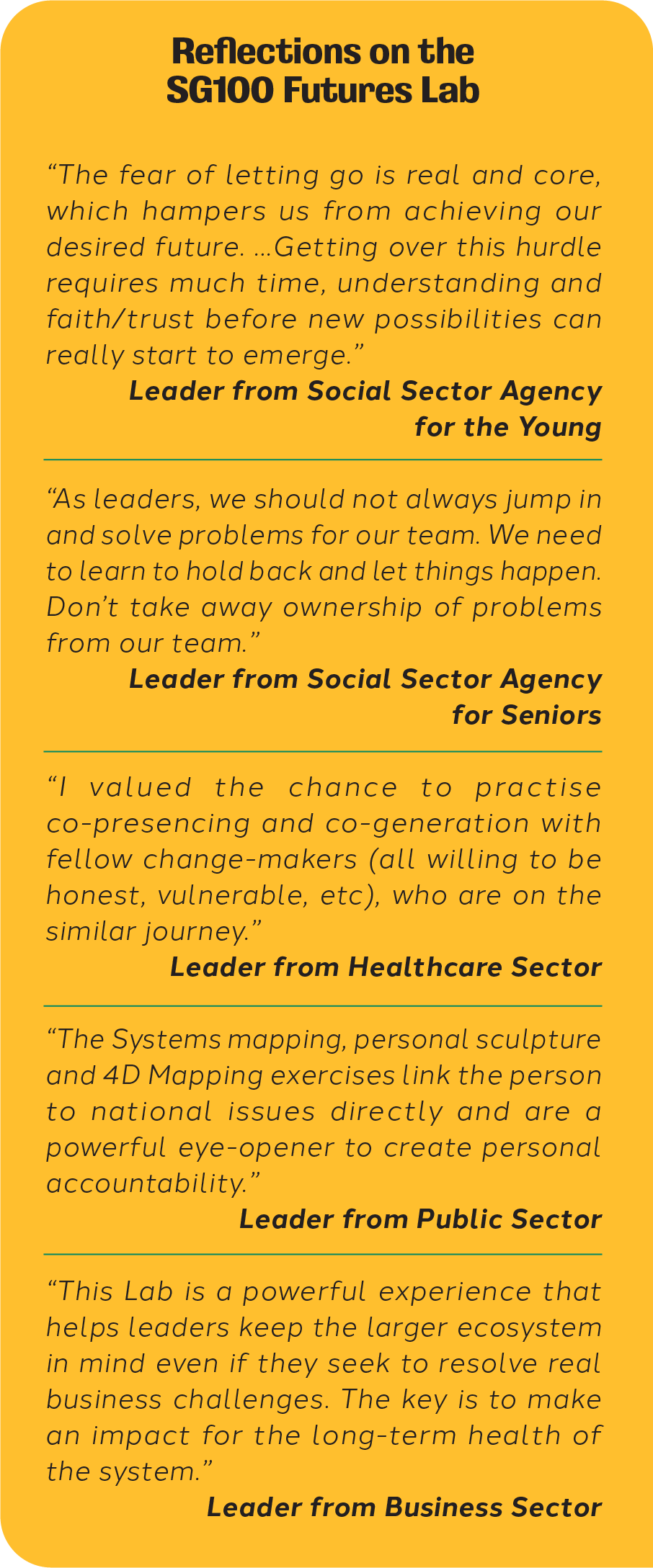
- Address fear of Letting Go: The fear of letting go is a significant barrier to achieving desired changes. Understanding this fear is crucial for facilitating deep, transformative change, which requires time, empathy, and trust.
- Move at the speed of trust: Trust-building and vulnerability are vital for creating a safe space in which leaders can share challenges and insights. Relationship building encourages participants to engage honestly with one another, paving the way for authentic collaborations and collective innovation.
- Suspend knowing: Recognising that knowing is often overrated, gently nudge the group through reflective practices to name and suspend the voices of judgement, cynicism and fear.
- Practise collective awareness: Embodiment techniques let participants visualise current realities and emerging possibilities, accessing 'wisdom below the neck'. This process helps them identify personal blind spots and fosters open dialogue about their roles in systemic change, enhancing awareness of their impact on larger systems and personal accountability.
- Looking for Leverage Points: Identifying key leverage points for systemic transformation moves participants from reaction to regeneration.
Conclusion
As a prototype, the SG100 Futures Lab holds promise for integrating embodied intelligence in the process of bringing together trisector actors to address complex social and technical challenges. It is most helpful when:
- The issues we want to address have no single root cause and is dynamically, socially and technically complex: such as determining the future of a nation. A lab of this nature helps with unpacking the complexity of the issue by adopting a systems perspective, mapping interdependencies, and exploring mental models.
- The issue cannot be solved by any single organisation and lacks a clear or widely agreed definition among the actors who could address it. This process helps to harness and represent the multiple and often marginalised voices of the system.
- An issue is emergent and shifting, defying silver-bullet solutions, or when people are unsure of how to make progress. This process may help with breaking down silos of learning and practice, by sensing and responding together on what is waiting to emerge.
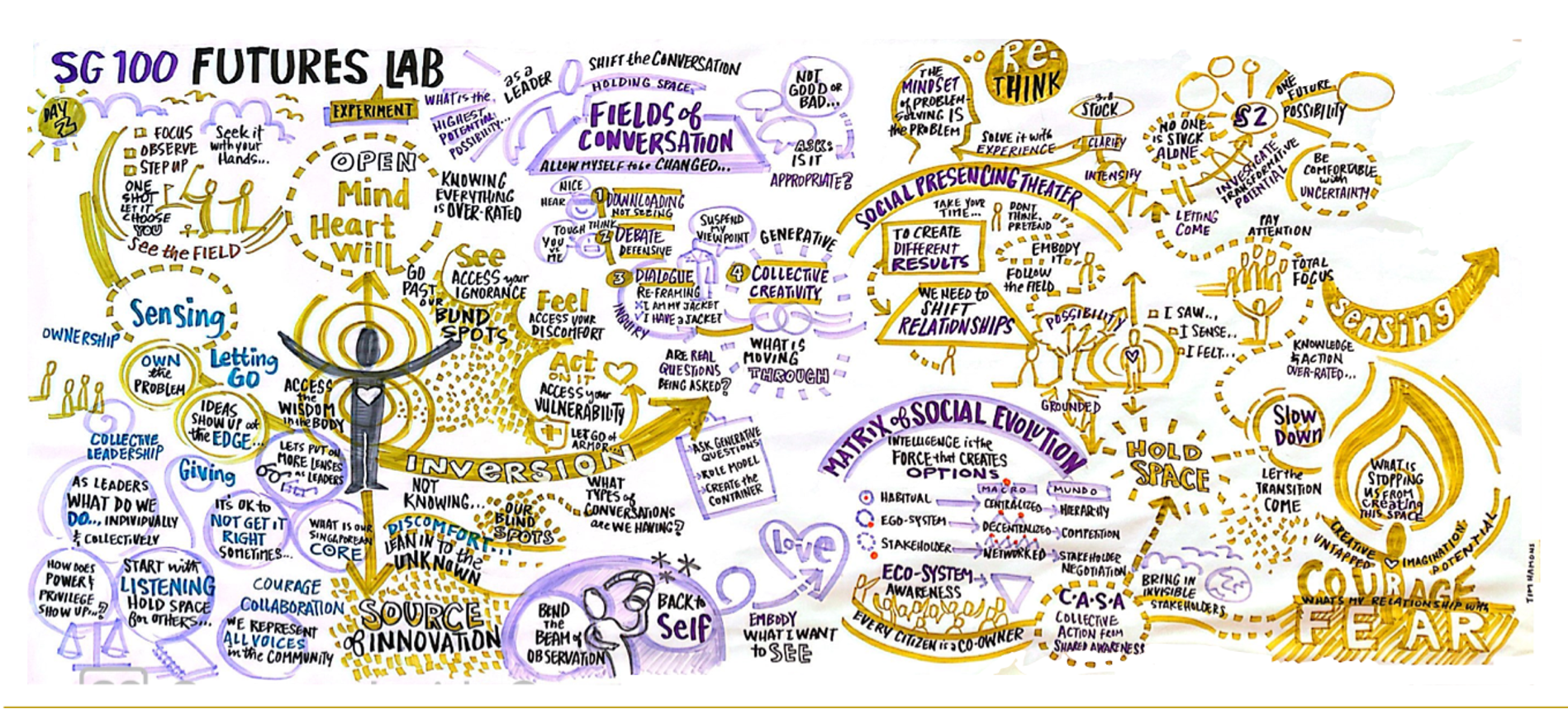
The Lab process addresses the need for a different kind of platform where leaders gather as concerned citizens and activate conversations on what we all care most about, suspending the tendency to leap into action from the start.
Instead, the process places significant importance on developing the ontological intelligence of leaders—a self-awareness about who they are and what their deep purpose is—by having people access their 'below the neck' knowledge of heart and will: which is often overlooked in traditional collaboration settings that focus primarily on actions and strategies. This is vital for sustainable transformation.
By prioritising deep dialogue, inner awareness and community building, the process lays the groundwork for leaders across sectors to come together to co-create a future we all want.
NOTES
- https://www.sgpo.gov.sg/
- Otto Scharmer is the author of Theory U (Berrett-Koehler, 2007), co-author of Leading from the Emerging Future: From Ego-system to Eco-system Economies (Berrett-Koehler, 2013) and Founding Chair of the Presencing Institute.
- The SG100 Futures Lab was organised by the Centre for Systems Leadership, Singapore Institute of Management and supported by the Ministry for Community, Culture and Youth.
- The seeding conversation was initiated in 2022 by a nucleus group co-hosted by Jacqueline Wong, the Managing Director of Sequoia Group and founding Dean for the Centre for Systems Leadership and Seah Chin Siong, then President and CEO of Singapore Institute of Management and Chairman of NVPC. Seah Chin Siong then invited Anita Fam, President of the National Council of Social Services and Gerard Ee, Chairman of the Agency for Integrated Care, as well as other leaders from the 3P sectors, into the conversation.
- The Lab's process was based on Theory-U, a methodology pioneered and developed by Dr Otto Scharmer, through grounded-research from interview over 300 leaders across the world who have pioneered transformational changes across society, government and business. Otto Scharmer is the founder of the Presencing Institute. The process is a social technology for co-sensing, co-evolving and co-creating the future from an expanded level of collective awareness. See C. O. Scharmer, Theory U: Leading from the Future as It Emerges (Berrett-Koehler, 2007).
- Yaden et al. The overview effect: Awe and self-transcendent experience in space flight. Psychology of Consciousness: Theory, Research, and Practice. 2016;3(1):1–11.
- https://presencinginstitute.org
- https://www.u-school.org/4d-mapping