

Navigating Complexity through Collaboration
ETHOS Issue 28, Apr 2025

In today's increasingly complex world, public officers are faced with the daunting task of addressing multifaceted challenges that transcend traditional boundaries. These problems often involve multiple stakeholders, require innovative solutions, and demand a collaborative approach. To effectively navigate this complex terrain, especially with multiple stakeholders, public officers must embrace a new paradigm of leadership and partnership.
Often there is more than one explanation or solution to a complex problem. Although we may not have either full knowledge of the causes and effects of a complex problem, or control over the key levers, we do know that such problems tend to involve many stakeholders, all of whom may have different opinions and views on how and what should be done to address the issue. A complex problem will also need significant resourcing, usually longer term, and therefore can be a large economic burden that no one party, including the government, can bear alone.
In addressing problems, we tend to look for a template solution that we can apply, replicate and scale up. Unfortunately, complex problems do not have such straightforward template answers: we often have to go in blind, try out different approaches and test how we are doing along the way. Moreover, there may not be any simple right or wrong answers to such problems.
In many ways, we have to take a broader, ecosystem approach in addressing a complex problem. For instance, unemployment may impact healthcare needs and family stability, and relate to school absenteeism. All the elements need to be looked at in totality. We know we cannot do this alone. No one stakeholder has sufficient reach, time, effort and resources. To address such problems, we must work with partners within and across the public, private, and people sectors so that collectively we can make a difference.
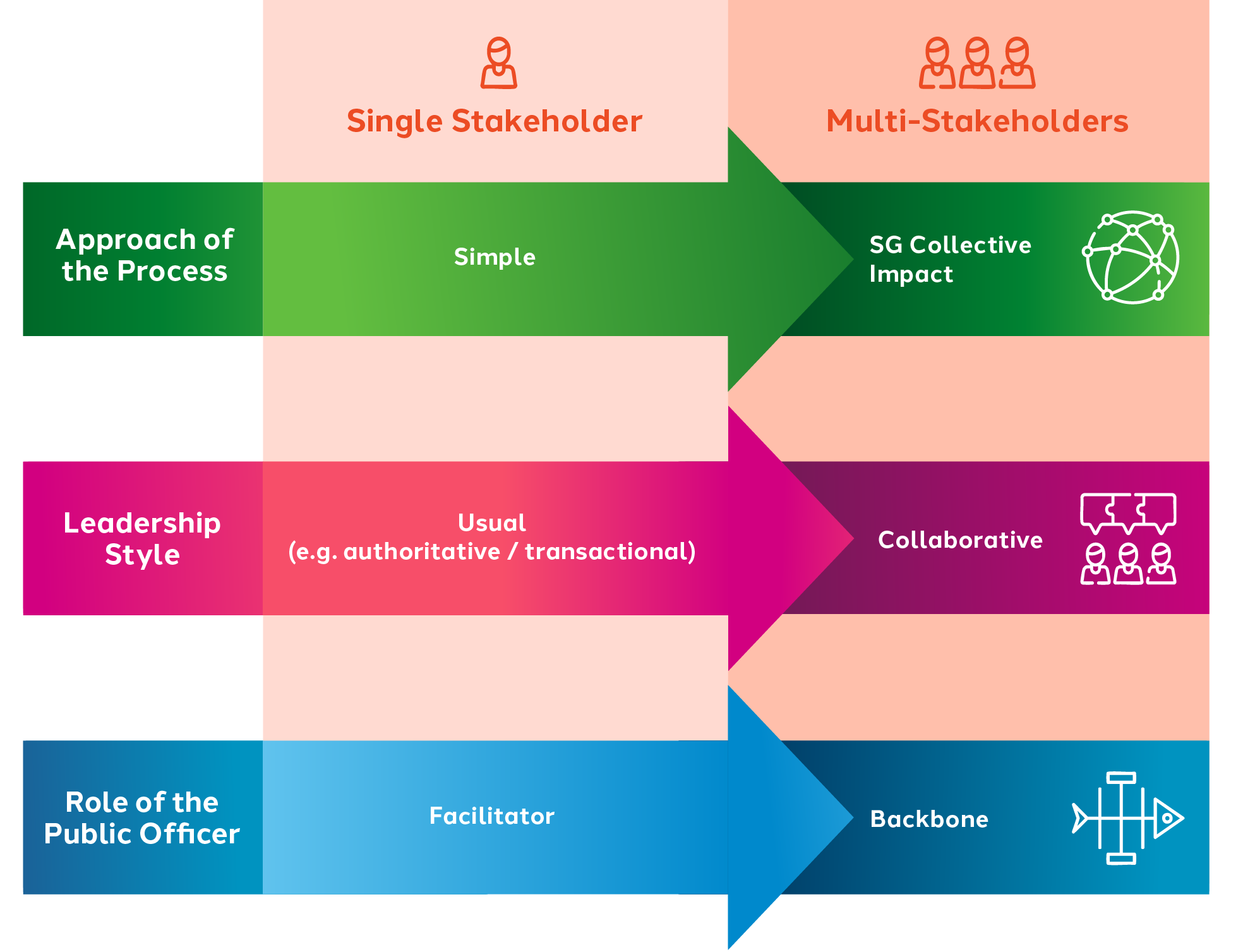
What then is the best way to engage with ecosystem partners? How can we make sure they stay with us and share ownership of the work needed to address an identified problem? How do we motivate them?
Our experience at the People's Association (PA) tells us, that as we move from an environment where we work mainly with a single or a few stakeholders to multiple partners and multi-stakeholders, we must also shift our mindset and our approach of the process.
We also need to reconsider our leadership style. Managing any one stakeholder is relatively easy. We can often be transactional and sometimes top-down in our approach, especially as a funder for programmes. With multiple stakeholders, the relationship becomes more of one among peers, as everyone is a leader in their own sphere of influence. There needs to be mutual respect and a more collaborative approach.
As public officers, we are familiar with our role as facilitators today. But when working with multiple stakeholders to address complex problems, we need to shift from being just facilitators to being a backbone, connecting with different people.
The Power of SG Collective Impact
For more than a decade, PA has applied the SG Collective Impact framework as a robust approach to tackling complex social problems with multiple stakeholders. It has been tested in contexts involving long-term, multi-stakeholder and complex issues such as the CDC Vouchers Scheme1 with over 60 stakeholders, as well as the Integrated Care Programme (ICP),2,3 a nine-year-long social mobility programme for 650 primary school students who graduated into secondary schools, with wraparound care for their families.
The SG Collective Impact framework embraces three fundamental concepts:
- Collective Impact
- Collaborative Leadership
- Community Development
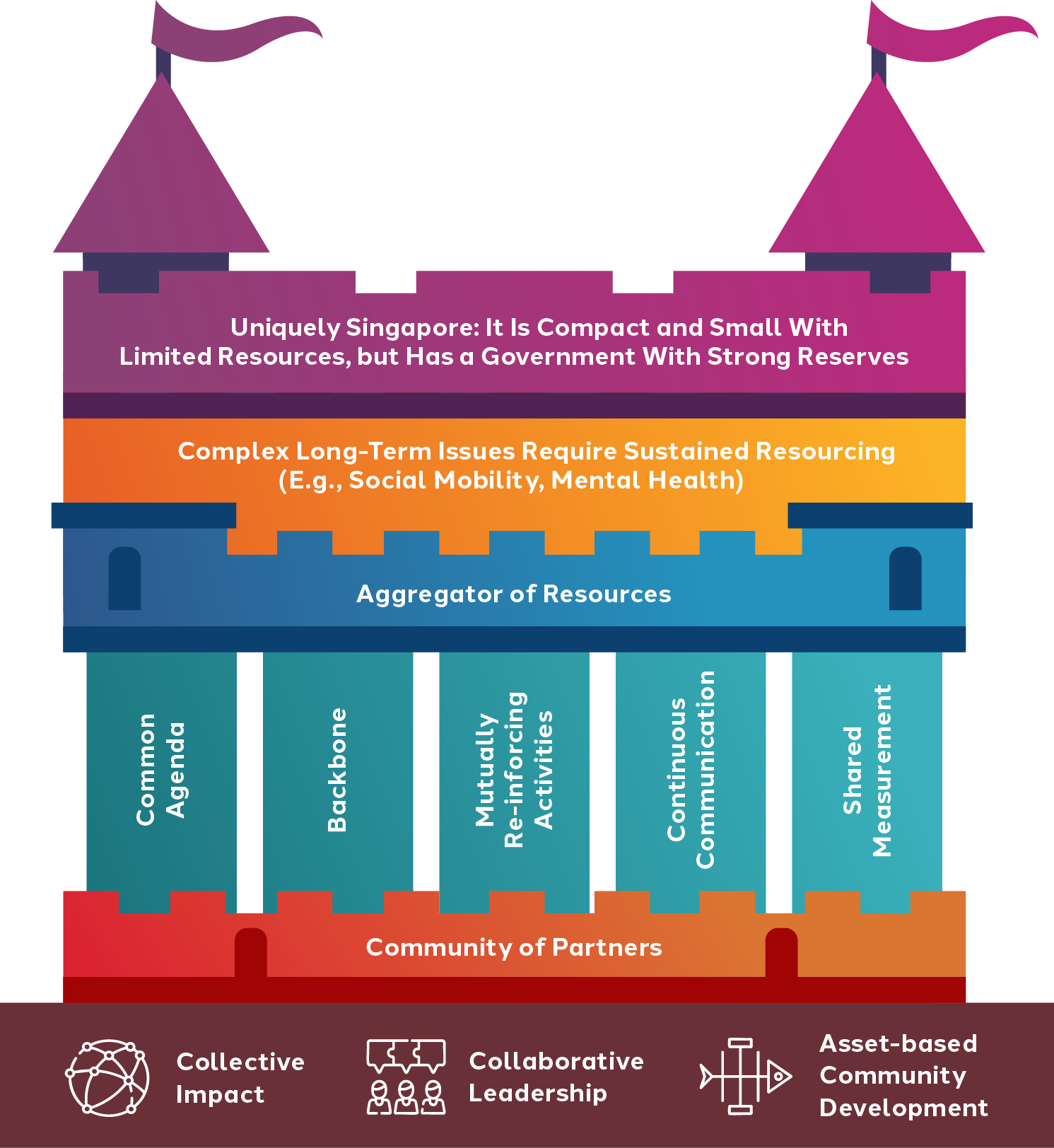
Each concept reinforces the partnership and helps build the social capital4 required to sustain stakeholders' interest and commitment, as well as to co-solve complex problems for the longer term.
SG Collective Impact is adapted from the Collective Impact framework proposed by John Kania and Mark Kramer in 2011.5,6 Unlike other countries, Singapore is both compact and small, but it has a government with strong reserves. This unique context gives our adaptation of the Collective Impact framework a slightly different slant. Instead of the original five conditions, we consider seven conditions and two further embedded concepts—Community Development and Collaborative Leadership—in SG Collective Impact.
The original five conditions PA adapted from the Collective Impact were:
- Common Agenda: Aligning and co-creating a shared vision and goals. With any programme involving multiple stakeholders, everyone must share a common goal and purpose. Each may have their own perspective, but we must work towards the same overall purpose.
- Backbone: Establishing a dedicated entity and personnel to guide vision and strategy beyond just coordinating and facilitating collaboration. Public officers can play this strategic 'backbone' role, which is to think through and manage the process, see clearly where help is needed, and rally people together to provide it.
- Mutually Reinforcing Activities: Ensuring complementary efforts and roles, while avoiding duplication. Every complex problem is a unique problem. With limited resources and time, every partner needs to focus on what they do best and not duplicate efforts. In order not to spread any one stakeholder too thin, there needs to be partners who can provide complementary support, to one another and to the government, in different areas of the work needed.
- Continuous Communication: Having big and small conversations with stakeholders consistently and regularly, to foster trust and confidence among stakeholders.
- Shared Measurement: Adopting common metrics to track progress and impact that all stakeholders must agree to.
To these, PA added two additional conditions for SG Collective Impact:
- Aggregators of Resources: Leveraging Community Development Councils (CDCs) to mobilise resources and address local needs. CDCs are nimbler and closer to the ground and often the first respondents for emerging needs. For example, during the COVID-19 circuit breaker, all schools were closed and went on home-based learning (HBL). Students relying on free canteen food for lunch missed out on lunch when they had HBL. CDCs received feedback from social workers and within 10 days, CDCs developed an end-to-end digital scheme called CDC Student Meals which helped over 8,000 students whose families lived in rental flats, over the next one and half months.
- Community of Partners: Building a strong network of organisations committed to long-term collaboration and mutual support. To nurture a community of partners who trust and have confidence in each other is not easy. But when this happens, the partners will not run away in times of need and trouble. When the Integrated Care Programme (ICP) ran out of money in its first three years, the partners shared their funders and worked together to overcome the programmes' financial challenges.
The Concept of Asset-Based Community Development: Empowering Local Communities
Community development is essential for creating sustainable and resilient communities. By investing in local capacity, fostering social cohesion, and promoting civic engagement, we can empower communities to address their own challenges and drive positive change. One role of the CDCs is to build capabilities in partners and residents. Beyond doing things for residents, partners also tap on the CDCs to help residents kickstart the process of learning and relearning to achieve a better quality of life for themselves.
Community development, like Collective Impact, is a place-based concept. In this case, PA adopted an Asset-Based Community Development (ABCD) approach to identify local partners and leverage local strengths and resources to spark and nurture community participation and to build capability in partners and residents. The objectives are:
- Community Organising: Mobilising residents to advocate for their needs and participate in decision-making
- Capacity Building: Providing training and support to community members and organisations
- Collaborative Partnerships: Building strong relationships with government agencies, NGOs, and the private sector.
The Concept of Collaborative Leadership: A Catalyst for Change Culture
It is common for organisations to have a top-down hierarchical leadership style, but this is no longer as readily accepted. A newer generation of Singaporeans wants a more collaborative way of working together. The public increasingly also expects explanations for what is being done, rather than accepting statements or instructions at face value from the authorities.
It is important to first determine whether a situation calls for collaborative leadership or a simpler, more directive style. Some problems only need consultation or coordination. But with complex problems, where there are no clear solutions and there are also many stakeholders at play, collaborative leadership becomes vital.
Collaborative leadership is a leadership of process, and not of people. Collaborative leaders are social architects who facilitate, shape and support conversations. As collaborative leaders, our focus is on the process of getting things done in a way that is win-win for all parties, having the courage to call a spade a spade, being humble and acknowledging that we do not know everything.
By investing in local capacity, fostering social cohesion, and promoting civic engagement, we can empower communities to address their own challenges and drive positive change.
A table is like a 'leveller'. When we sit around the table, it does not matter if you are a boss or employee or board member: everyone is equal because everyone is a leader. At the end of the day, our focus must be how to arrive at and to achieve the common agenda. During the nine years of ICP, there were many instances of strong disagreement. Despite this, the partners remained friends, knowing that everyone was acting from the best intentions for the programme.
Collaborative leadership is based on a mindset of shared power: it is not about ego. We do not fixate on telling people what to do. Instead, we focus on rationalising and promoting understanding and consensus on what we do about certain things in certain ways. We also gather feedback on where something is not right with the current situation and discuss ways to rectify it through the process.
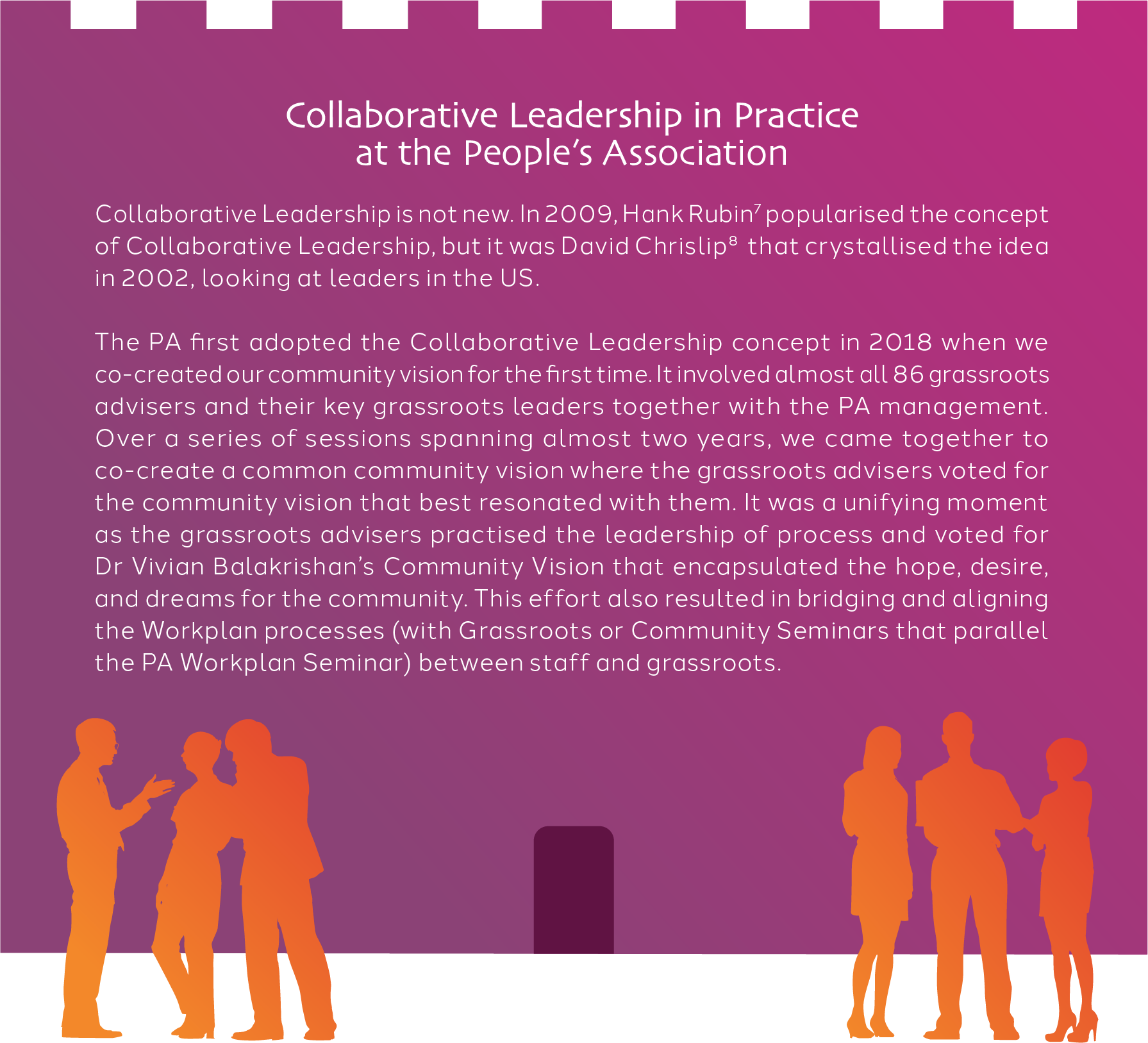
With shared power also comes shared credit. At PA, we invite all our other agencies to share in the recognition for successful programmes such as the CDC Vouchers Scheme, because we want to acknowledge and motivate our partners who have been on the journey with us. This is also what builds mutual trust and respect, and hence true collaboration over time.
Today, we recognise that knowledge is power. But in a network society, information does not become power unless we share it for broader use, rather than keep it to ourselves.
Underpinning all these behaviours are the values that guide us. Collaborative leaders are open, authentic, inclusive and not suspicious of others' intent. This means being true to ourselves and to others. If we have any point of disagreement or unhappiness, we say so and work out the issues. We participate in rather than direct the activity—just because we chair a committee does not mean we tell everyone what to do. This is also how we role model leadership for a future generation of leaders who can take Singapore forward together with the community.
Collaborative leadership is essential for fostering a culture of partnership and innovation. By embracing a leadership of process, authenticity, and shared power, public officers can empower stakeholders to contribute their expertise and perspectives.
- Leadership of Process: Focus on facilitating dialogue, building consensus, and guiding the collective effort.
- Authenticity: Be transparent, honest, and genuine in interactions with stakeholders.
- Shared Power: Distribute decision-making authority and encourage participation.
By adopting these principles, public officers can create a supportive environment where diverse voices are heard and valued.
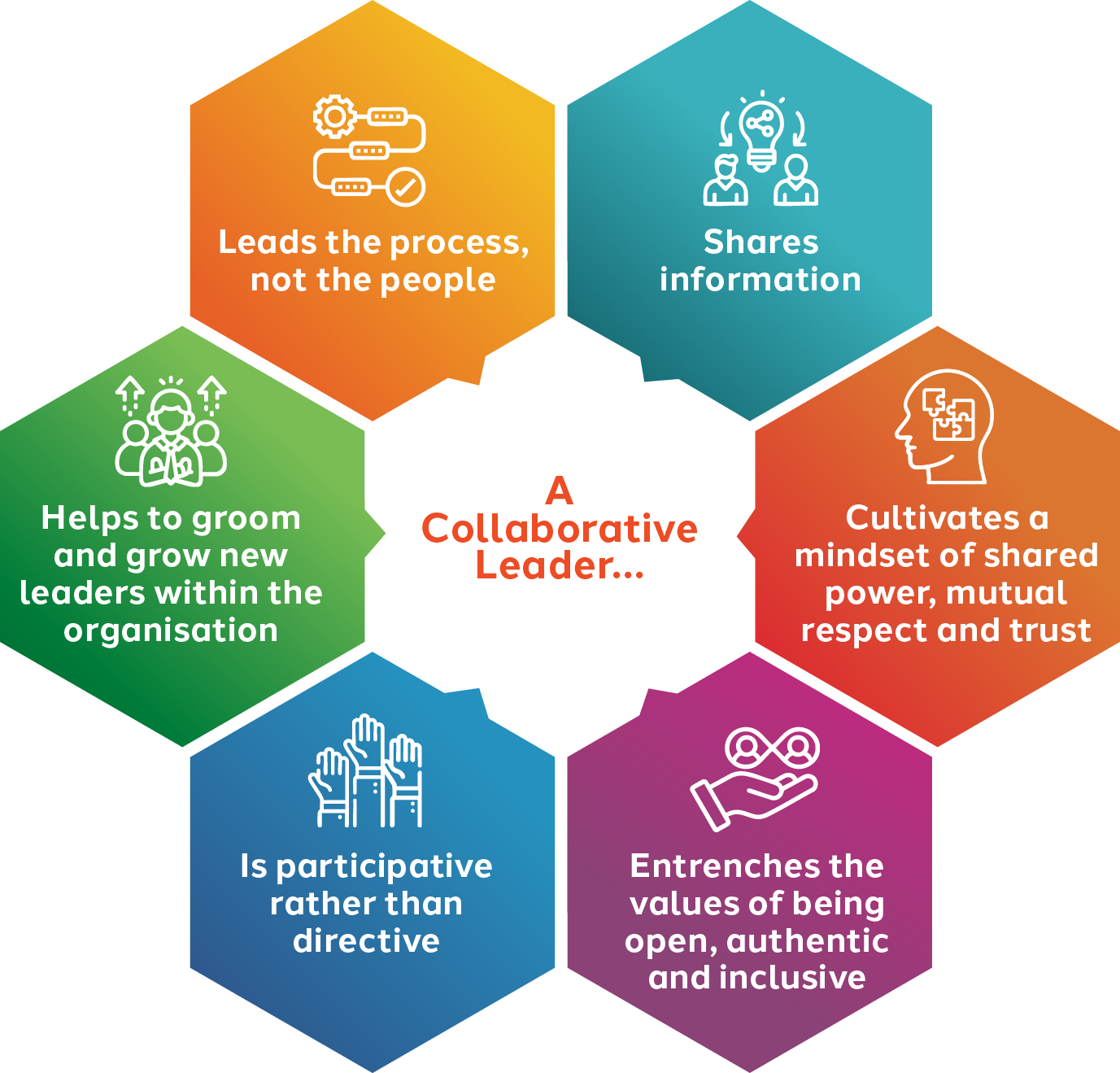
Figure 3. The strengths of collaborative leadership. The Evolving Role of Public Officers as Backbone for Complex Problems
As a facilitator of collaboration, public officers play a useful but still limited role. In a backbone role, however, we can guide the overall vision and strategy of the process, working with other partners and stakeholders. Our job is to ensure that the process is headed in the right direction.
Being a backbone also entails establishing and monitoring shared measurement, which could be outcome or output based, to assess progress. A key backbone function is to gather public will: rallying people by sharing with them what we are doing and how we have done it, and galvanising their support.
The backbone also works to advance policy goals and mobilise funding and resources towards them. One way in which we can do this is by aggregating needs and resources, by building a community of partners so that we know where both the local needs and local assets are, on the ground. The PA CDC Planning & Development Division has been playing the backbone role since 2013, helping in both community and CDC programmes.
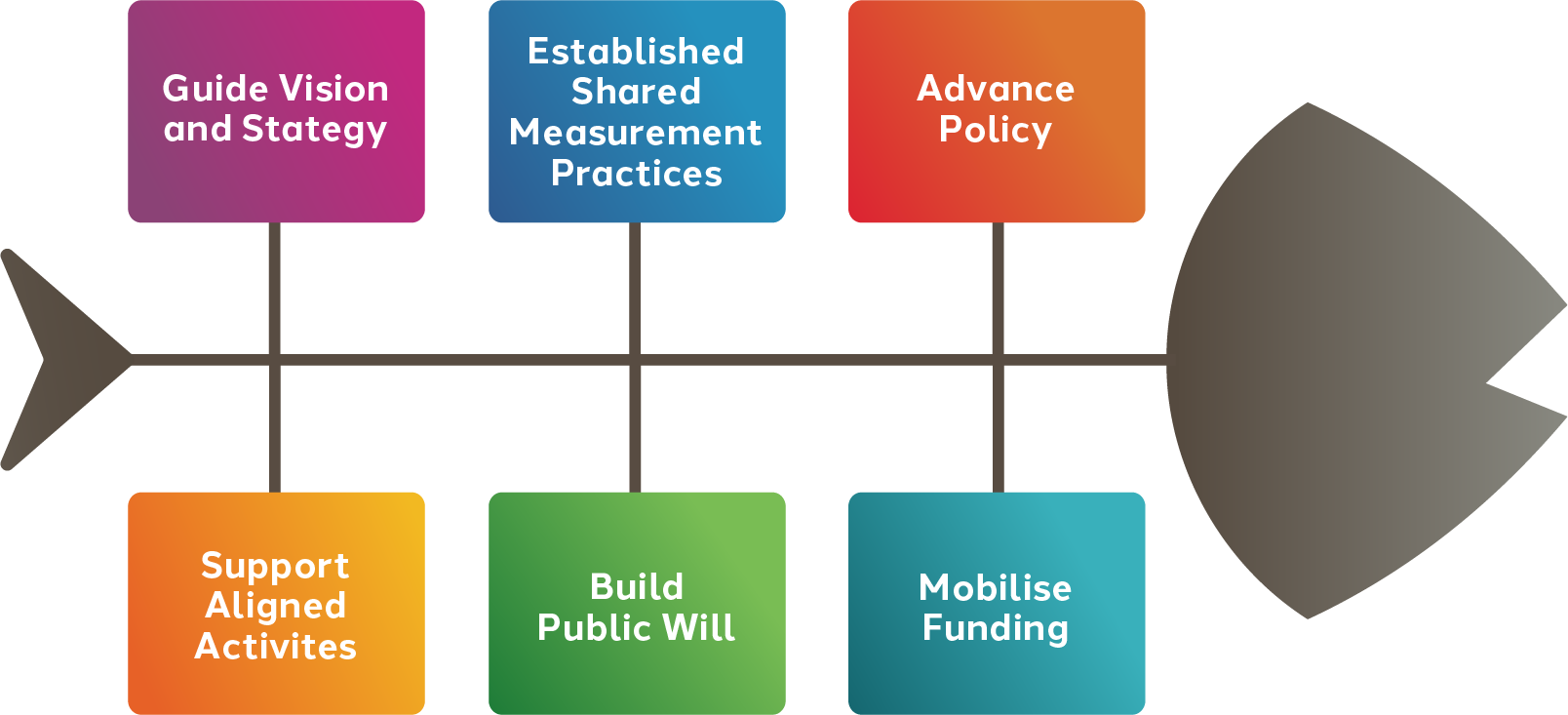
Figure 4. The role of the public officer as backbone for complex problems. As backbone, public officers can:
- Provide Strategic Leadership: Setting the direction and guiding the collaborative process.
- Facilitate Collaboration: Building and maintaining strong relationships among partners.
- Mobilise Resources: Securing funding and other resources to support the initiative.
- Monitor and Evaluate: Tracking progress and making necessary adjustments.
- Communicate Effectively: Sharing information, celebrating successes, and addressing challenges.
All public officers can catalyse meaningful change. The backbone role is a crucial one for public officers looking to drive collaborative initiatives forward. By connecting stakeholders, facilitating collaboration, and monitoring progress, public officers can ensure that a collective impact effort remains focused and effective.
The Future of Public Service
As we move forward, we as public officers must continue to adapt to the evolving landscape of public service. There are both challenges and opportunities that lie ahead, due to the emergence and interplay of key trends such as:
- Technological Advancements: Leveraging technology to enhance collaboration, data analysis, and service delivery.
- Emerging Social Issues: Addressing new and complex social problems, such as climate change, inequality, and mental health.
- Changing Expectations: Meeting the rising expectations of citizens for transparency, accountability, and responsiveness.
To navigate these challenges and seize the new opportunities they represent, public officers must embrace a collaborative approach, build strong partnerships, and continuously innovate. By working together, we can create a brighter future for our communities. We can be the catalysts for positive change, empowering Singaporeans and building a better future for all.
KEY TAKEAWAYS - Complex problems require complex solutions
- Strong leadership is vital for driving change
- Collaboration is essential for achieving significant impact require complex solutions
- Community development is a cornerstone of sustainable progress
NOTES
- See https://vouchers.cdc.gov.sg/
- Lim Kar Yee and Ong Zhong Liang, "North East Integrated Care Programme (ICP): A ground-up and grounded model," Social Space (2018): 29–33, https://ink.library.smu.edu.sg/lien_research/169.
- Lim Kar Yee, Gary Lim and Tan-Wu Mei Ling, "Community Care Through Collaborative Leadership," Ethos Digital Issue, No. 4, April 2019, https://knowledge.csc.gov.sg/digital-issue-04/community-care-through-collaborative-leadership/
- Robert D. Putnam, Bowling Alone: The Collapse and Revival of American Community (Simon & Schuster, 2000).
- John Kania and Mark Kramer, "Collective Impact," Stanford Social Innovation Review 9, no. 1 (2011): 36–41, https://doi.org/10.48558/5900-KN19
- John Kania and Mark Kramer. "Embracing Emergence: How Collective Impact Addresses Complexity." Stanford Social Innovation Review, 2013, https://doi.org/10.48558/ZJY9-4D87.
- Hank Rubin, Collaborative Leadership: Developing Effective Partnerships for Communities and Schools (Sage, 2009)
- David D. Chrislip, The Collaborative Leadership Fieldbook (Jossey-Bass, 2002).
ADDITIONAL RESOURCES
- Lim Kar Yee, "FYI – For Your Innovation: Podcast Episode 5," on LEARN, www.learn.gov.sg.
- Community 2015: Masterplan 2015 (People's Association, 2010).
- Jimmy Yap, We Are One, The People's Association Journey, 1960-2010 (People's Association, 2010).