

Reframing Work for the Future
ETHOS Issue 29, Nov 2025

The CPF Board's ASG is the Singapore Government's key implementing unit for its citizen disbursement schemes.1 Currently, with a strength of about 120 officers, ASG manages end-to-end operations — from data processing and eligibility checks to disbursing payments and addressing enquiries and applications to re-assess scheme eligibility — for public schemes such as Silver Support, GST Voucher and Workfare Income Supplement. Beginning as an ad hoc team handling occasional national projects, we have evolved into a sophisticated operation that implements an average of 3 new national schemes annually.
ASG's impact has been most evident during times of crisis. During the COVID-19 pandemic, we implemented 13 schemes from 2020 to 2021. These included both widely publicised schemes such as the Solidarity Payment and Job Support Scheme as well as lesser-known ones such as Market and Hawker Centre Relief Fund scheme, which disbursed $5.4 million to 10,000 hawkers to alleviate the loss of income during the pandemic. As of 2024, ASG has administered over 44 different schemes, reflecting exponential growth in capability and reach.
The Past: Scheme-Centric Work Silos
Historically, ASG officers had worked in small vertical teams, specialising in individual schemes. This structure worked well when the schemes handled were fewer and simpler.
However, this model had become unsustainable in light of new challenges, such as:
- Compressed timelines due to national interest or economic reasons, e.g. urgent implementation of COVID-19 support measures to provide financial relief;
- Resourcing and manpower challenges; and
- Increasingly complex and customised requirements for scheme implementation.
With the Singapore Public Service embracing digitalisation and integrated service delivery, we needed to pivot to a more sustainable way to implement schemes. Our pivot was also an opportunity to streamline business processes and efforts, since many of the schemes we managed shared similar operational processes (e.g. disbursement via common payment modes) and system requirements.
As part of this agency transformation, we wanted to equip our officers with new competencies — from data analytics and process automation skills to agile project management — to better tackle the evolving landscape of citizen disbursement schemes. This objective aligned perfectly with the national SkillsFuture movement's emphasis on building a nation of lifelong learners that value skills mastery.
ASG's Transformation Journey
Building a Future-Ready Workforce
ASG's organisational transformation was not simply about restructuring: it was about building a workforce equipped with the skills and knowledge to meet future demands while being empowered to do their life's best work. This was facilitated through careful planning, identifying and placing officers in roles that matched their strengths; developing targeted competency frameworks to apprise officers of the competencies required in the new roles; and curating training roadmaps to upskill and bridge any competency gaps.
From Scheme-Centric to Function-Centric
A key pivot for ASG was the shift from scheme-specific teams to teams organised around functions (e.g. the team in charge of disbursement now oversees payout disbursement for all schemes). This eliminated duplication across different schemes that shared common functions such as disbursing payouts and sending notifications. The newly organised functional teams could now focus and build on their respective core capabilities (e.g. data provision/allotment, disbursement, customer experience, addressing enquiries and applications to re-assess scheme eligibility). This shift also harmonised common business processes, standardised workflows and templates across schemes, in a way that could be easily extended to new schemes.
From Specialised to Broader Skillsets
This functional structure allowed our officers to develop deeper expertise in two ways. First, by focusing on specific functions rather than schemes, officers could master their individual domain areas (such as data analytics or customer service) through curated training roadmaps and apply these skills across multiple schemes. Second, as officers handled similar functions across different schemes, they gained broader exposure to the overall landscape of citizen disbursement schemes and discovered new opportunities for improvements.
Through regular feedback sessions with the supervisors, officers shared the differences encountered in operational processes across schemes and came together to identify best practices that could be applied across the board. Officers were also encouraged to share their experiences and key learning points at suitable platforms to foster broader learning (e.g. department or cross-department meetings). These strengthened our culture of continuous improvement and innovation.
Our Transformation Approach
ASG adopted a 'think big, start small, act fast' approach in our transformation, implementing concrete changes in how we operate. For example, to shift from having separate teams addressing enquiries and applications to re-assess scheme eligibility across different schemes, officers were cross-trained to become proficient in every scheme, while at the same time re-engineering the underlying business processes (e.g. aligning service standards and standard operating procedures across schemes) and IT systems (e.g. setting up a centralised Case Management System for cross-scheme cases).
Recognising that our people were central to this transformation, we carried out comprehensive engagement across all levels. We engaged middle managers through leadership conversation sessions to co-create our vision of success. At the ground level, we facilitated open dialogue through regular "ASG Connect" sessions and focus group discussions, while establishing dedicated platforms to ensure our policy owners bought into changes. To strengthen our partnership with key stakeholders such as the Ministry of Finance, we established secondment arrangements for our staff to strengthen cross-learning, inter-institutional communication and understanding.
ASG's Approach to Strategic Workforce Transformation
Drawing on our inclusive change management approach and strong governance structure, ASG was able to transform our workforce through these key initiatives:
| Systematically defining functional team roles through Strategic Workforce Planning | We thoroughly reviewed the proposed organisational structure, scope of work, and identified optimal functional team placements, carefully identifying and placing officers in roles that matched their strengths.
Through close partnerships with relevant stakeholders such as CPFB's Human Resource Department and many rounds of deliberation and planning, we optimised the job fit for affected officers while demonstrating our commitment to people-centric change management. |
| Developing targeted competency frameworks and training roadmaps | We established proficiency level tagging for both core and technical skills in ASG and identified competency gaps across three focus areas:
|
| Maintaining transparent communication about changes and support measures | Through "ASG Connect" sessions, team leads shared detailed insights about their functional teams' scope of work and key priorities, reinforcing our inclusive engagement strategy. |
By combining strong governance with inclusive change management, ASG not only transformed while maintaining operational excellence, but also built a resilient foundation for future change.
Reaping the Benefits of Transformation
Through strategic transformation, ASG optimised our delivery of services to the public while reaping significant organisational benefits:
- Harmonised common business processes: Consolidating similar processes across different schemes has enabled greater scale economies and efficiency. Establishing common templates and workflows have eliminated redundancies and created scalable processes that could be easily replicated for new schemes. This has enabled CPFB to implement more citizen disbursement schemes over time.
- Enhanced service experience: As part of streamlining our processes, we worked with ministry partners to align operational guidelines and documentary requirements across schemes. This has led to a more consistent customer experience for citizens requesting for a re-assessment of their eligibility for different schemes.
- Better retention and attraction of talent: More disbursement schemes in action means our officers have more opportunities to build skills, experience and broaden their work exposure. They get to build expertise within their specific domains, while being deployed more readily to support multiple schemes. This leads to better opportunities for professional growth and more engaging career paths.
ASG's transformation has yielded significant results: our operational efficiency and productivity have markedly improved, with the turnaround time for new scheme implementation reduced by 20% and the cost per dollar disbursed decreasing to less than $0.01. Our capacity has grown exponentially, from supporting 2 schemes in 2012 to successfully administering 15 schemes in 2024.
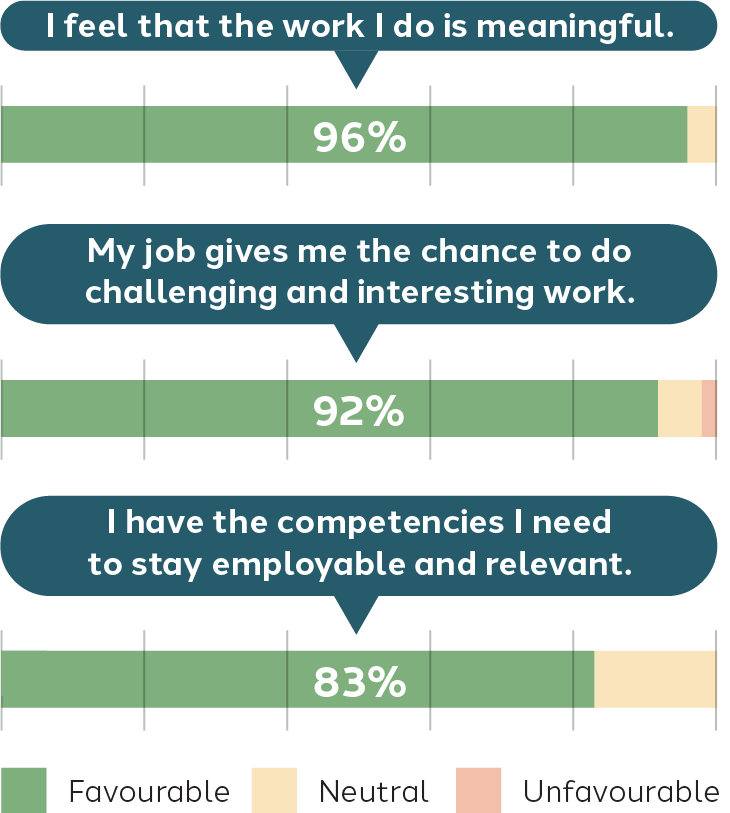
Beyond systems and processes, people are at the heart of ASG's transformation. Responding to a recent pulse survey, more than 90% of our officers expressed that they found their job meaningful, challenging and interesting. About 80% felt confident about the change even with new structures and streamlined processes in place.
Personal Experience: Shawn's Story
Shawn, who joined ASG in 2017, shares his experience of being part of the agency's transformation efforts:
"Before ASG's transformation, my work was confined to processes and IT systems for a single scheme. After the transformation, I had to shift from being a specialist in a single scheme to being versatile and well-versed across multiple schemes.
It was not an easy transition, as my workload changed dramatically. From following a specific set of procedures when addressing enquiries and re-assessing individuals' eligibility for one scheme, I found myself managing cases across multiple schemes, working with different IT systems and juggling various processes. To be honest, the change was initially overwhelming. The steep learning curve of taking on multiple schemes was daunting. However, we managed to overcome this: through comprehensive training provided to affected officers, e.g. hours and hours of briefings on the scheme operation processes along with on-the-job-training on how to handle different scenarios; and more importantly, collaboration and teamwork with my colleagues. We supported one another, shared knowledge and gradually built confidence in handling cross-scheme operations.
This transformation process has not only expanded my technical knowledge, but also helped me become more resilient and innovative in my work. One of our proudest achievements was when we developed straight-through processing capabilities, enabling certain cases to be re-assessed automatically without human intervention. This allowed us to have more time to take on value-adding work such as other process improvement initiatives.
Looking back, I have found the continual need to challenge ourselves to think creatively about process harmonisation and policy changes deeply rewarding."
Learning from Transformation
Key Challenges
While our transformation journey has yielded significant benefits, it also threw up some challenges that demanded unique solutions and steadfast commitment from our officers:
- Minimising impact to BAU while undergoing transformation: As the key implementer of citizen disbursement schemes across government, ASG had to continue implementing new policy initiatives while maintaining existing operations during the transformation. The COVID-19 pandemic was particularly challenging as we had to implement urgent support measures like the Care and Support Package and the Self-Employed Person Income Relief Scheme (SIRS) in the midst of our transformation, while officers were still getting to grips with the new team structures.
- Managing mindset shifts and building learning agility: The shift from scheme-centric to functional teams meant fundamental changes in job scopes and team dynamics for most officers. This led to challenges we did not foresee. For example, transiting the team handling enquiries and applications to re-assess scheme eligibility to the function-based model gave rise to workload and upskilling issues as officers had to juggle multiple schemes and familiarise themselves with the operation processes for schemes that they had not been exposed to, even when they were working on their existing scope. Officers were initially overwhelmed from having to deal with new ways to handle cases covering multiple schemes. New solutions had to be found to handle multiple peak periods across the year (with schemes implemented in different months) compared with a single peak period for one scheme. This steep learning curve when gaining proficiency across multiple schemes highlighted the need for a longer acclimatisation period.
We overcame this by moving in phases instead of adopting a 'big-bang' approach. Beta teams centred around functions were set up to operate in parallel with the existing teams which were still scheme-specific. Pilot teams progressively evolved into full functional teams over time, allowing time and space to iteratively learn and adjust.
To address these issues, we adopted a multi-strategy approach. First, our leadership team invested significantly in change management to ensure a smooth transition. We conducted 18 leadership conversation sessions to reinforce a common vision of success for the transition. We also regularly updated our officers on transformation plans through various Connect sessions helmed by our change sponsor and I. These sessions focused on three key messages: updating the progress of upcoming initiatives, explaining the rationale behind key decisions, and highlighting the personal impact and benefits for officers (e.g. emplacement to higher value, redesigned jobs).
We established a Community of Practice (CoP) for team leads, creating a safe, open platform to raise awareness about concerns such as manpower constraints and workload issues, and to brainstorm solutions together.
We also collaborated with ministry partners such as the Ministry of Finance to get their support in resolving some of the resource constraints by bringing in short-term manpower, and planning and stretching out our implementation roadmap more sustainably.
Good Practices
ASG's transformation offers valuable lessons for organisational change in the Public Service. Its success rested on two fundamental pillars:
- Fostering unity through inclusive change management: Building trust with our people was both a driver and an outcome of success. In our journey to move as ONE ASG, we carried out a comprehensive engagement strategy operating at multiple levels: from leadership to officers to agency stakeholders. We realised early that change management is not about "negative consequence management". Critically, good change management puts in place strong pillars that support positive growth and successful implementation. A foundation of trust and open communication proved invaluable as we were able to identify teething issues early and resolve challenges more promptly. Cross-team collaboration also helped to align officers from different teams towards common objectives (e.g. product development and scheme administration teams working together to make revised business processes compatible with the new IT system).
- Establishing a strong governance structure: Early in this effort, ASG set up a dedicated transformation office with two critical functions: change management to coordinate and oversee the transformation journey, and project management to develop future work processes and underlying IT systems. This dual focus ensured both the human and technical aspects of transformation received equal attention. For example, the transformation office acted a neutral arbitrating party when differences arose between newly formed functional teams. It also helped bridge senior management and officers on the ground.
Looking Ahead
Our transformation from a scheme-centric to function-based operating model significantly enhanced our operational capacity. From managing 2 schemes in 2012, ASG has grown exponentially to administering 15 schemes in 2024, with further growth expected in the coming years, as the landscape of disbursement schemes continues to evolve.
Our new operating model and foundation of trust exemplifies the SkillsFuture movement's emphasis on lifelong learning and skills mastery. It has made possible a much stronger alignment between our human capital, business processes and technical infrastructure. This positions us well for future expansion, as we extend our capabilities to more use cases across government.
NOTE
- CPFB is designated as the whole-of-government Centre of Excellence for citizen disbursement schemes due to its expertise and extent of reach over target beneficiaries. Such specialisation enables better organisation of implementing capabilities across government, greater operational efficiency, and better customer-centricity in service delivery.